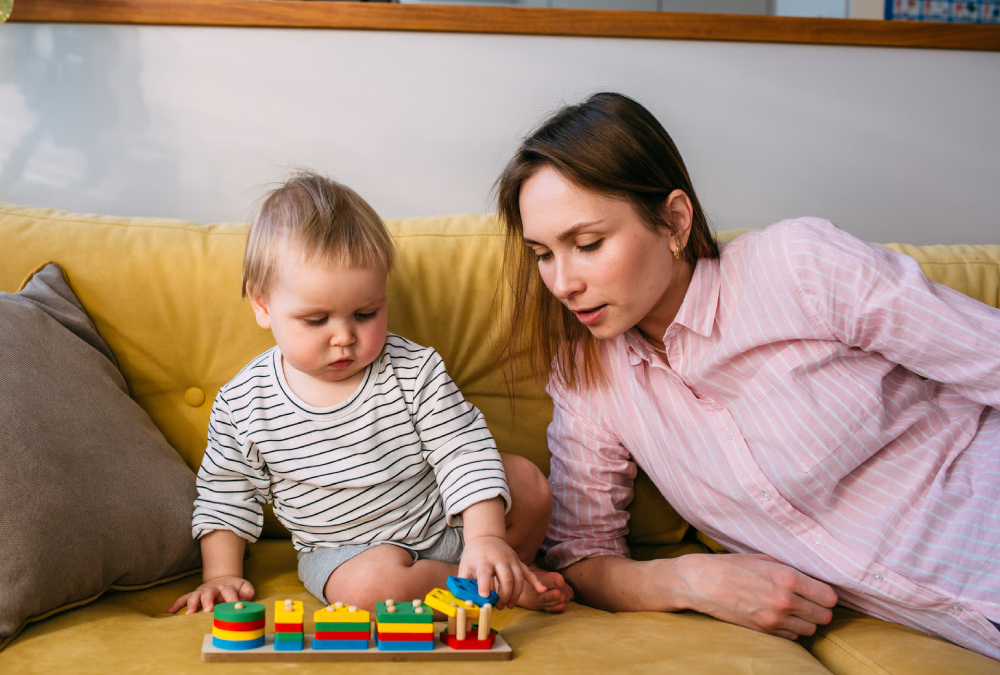

Child growth and development is a continuous process that begins from birth and continues through adolescence. Every child develops at their own pace, but there are certain “milestones” that help parents and doctors understand whether a child is growing normally. These milestones include physical, emotional, social, and cognitive (thinking) skills.
Understanding these important milestones helps parents track progress, identify delays early, and ensure proper care and support for healthy development.
1. What Are Developmental Milestones?
Developmental milestones are specific skills or abilities that most children can do by a certain age.
Types of Milestones:
- Physical (movement, sitting, walking)
- Cognitive (thinking, learning, problem-solving)
- Social (interaction with others)
- Emotional (expressing feelings)
- Language (speaking and understanding)
Each stage of childhood has expected milestones.
2. Milestones from Birth to 6 Months
This is the early infancy stage where rapid development occurs.
Physical Development:
- Lifts head briefly
- Moves arms and legs
- Rolls over (towards end of stage)
Cognitive Development:
- Recognizes familiar faces
- Responds to sounds
Social Development:
- Smiles at people
- Shows interest in faces
Language Development:
- Makes cooing sounds
- Responds to voice
3. Milestones from 6 to 12 Months
This is an active learning stage.
Physical:
- Sits without support
- Crawls
- Starts standing with support
Cognitive:
- Finds hidden objects
- Responds to name
Social:
- Shows stranger anxiety
- Enjoys playing with others
Language:
- Babbles (mama, dada sounds)
- Understands simple words
4. Milestones from 1 to 2 Years
Toddler stage begins.
Physical:
- Walks independently
- Starts running
- Climbs stairs with help
Cognitive:
- Identifies objects
- Follows simple instructions
Social:
- Shows independence
- Imitates adults
Language:
- Uses simple words
- Starts combining words
5. Milestones from 2 to 3 Years
Rapid language and motor development.
Physical:
- Runs more smoothly
- Kicks and throws ball
- Improved hand coordination
Cognitive:
- Sorts shapes and colors
- Starts imaginative play
Social:
- Plays alongside other children
- Shows emotions more clearly
Language:
- Speaks simple sentences
- Asks questions
6. Milestones from 3 to 5 Years
Preschool stage development.
Physical:
- Hops and climbs easily
- Draws shapes
- Better balance
Cognitive:
- Counts numbers
- Recognizes letters
- Improves memory
Social:
- Plays with other children
- Understands rules
Language:
- Speaks clearly
- Tells stories
7. Milestones from 5 to 12 Years
School-age development.
Physical:
- Stronger coordination
- Improved sports skills
Cognitive:
- Better problem-solving
- Academic learning improves
Social:
- Forms friendships
- Understands teamwork
Emotional:
- Learns self-control
- Understands responsibility
8. Why Milestones Are Important
Tracking milestones helps parents and doctors ensure healthy development.
Benefits:
- Early detection of delays
- Better learning support
- Healthy growth monitoring
- Guidance for parents
Conclusion
Child development milestones are important indicators of growth in physical, mental, emotional, and social areas. While every child develops at their own pace, these milestones provide a general guide to ensure healthy progress.
Monitoring these stages helps parents understand their child’s needs better and ensures timely support if any delays occur. Early attention and proper care can significantly improve a child’s long-term development and well-being.